Introduction
Urban food gardens represent one of the most accessible and impactful ways to increase food security, improve nutrition, and reconnect with our food systems in cities across Africa. Despite the challenges of limited space, urban environments offer unique opportunities for creative and productive gardening.
This guide is designed for anyone with access to a small outdoor space—whether it's a tiny balcony, a rooftop, a small yard, or even a sunny windowsill. We'll show you how to transform these spaces into productive food gardens that can provide fresh, nutritious produce throughout the year.
Urban gardening combines traditional growing knowledge with innovative space-saving techniques. Throughout this guide, we highlight approaches that are particularly well-suited to African urban contexts, including locally available materials, climate-appropriate plant selections, and water-efficient growing methods.
Why Urban Gardening Matters
Urban food gardens contribute to food security, provide access to fresh produce, reduce grocery expenses, decrease food miles, and create green spaces that improve air quality and mental wellbeing. Even a small garden can make a significant difference in your household's nutrition and connection to food.

A productive urban garden on a small apartment balcony in Nairobi, Kenya.
Planning Your Urban Garden
Successful urban gardens begin with thoughtful planning that considers your specific space constraints, environmental conditions, and gardening goals.
Assessing Your Space
Before purchasing any supplies, take time to observe and analyze your available space:
1
Measure Your Space
Determine the exact dimensions of your gardening area. Even small spaces can be surprisingly productive when well-planned. Record the length, width, and any height restrictions (important for vertical growing).
2
Track Sunlight Patterns
Observe how sunlight moves across your space throughout the day. Most vegetables need at least 6 hours of direct sunlight. Note which areas receive morning, afternoon, or all-day sun, and which remain in shade.
In tropical regions, afternoon shade can actually benefit many plants by protecting them from the most intense heat of the day.
3
Identify Water Access
Determine how you'll water your garden. Is there a nearby tap? Will you need to carry water from inside? Consider installing a simple rainwater collection system if possible.
4
Assess Weight Limitations
For balconies and rooftops, understand weight restrictions. Soil, especially when wet, can be surprisingly heavy. Check building regulations or consult with a structural engineer if you're planning a large rooftop garden.
5
Consider Environmental Factors
Note wind exposure, temperature fluctuations, and privacy considerations. Urban spaces often create microclimates that can be hotter, windier, or more sheltered than surrounding areas.
Setting Realistic Goals
Urban gardens work best when they align with your lifestyle, needs, and experience level:
- Start small and expand gradually. A few well-maintained containers will be more productive than many neglected ones.
- Prioritize crops you enjoy eating and that are expensive or difficult to find in local markets.
- Consider your time availability. Some crops require more attention than others. If you have limited time, focus on low-maintenance plants like herbs, leafy greens, and perennials.
- Be realistic about yields. While urban gardens can be surprisingly productive, they typically supplement rather than replace purchased food.
Common Planning Mistakes
Avoid these common urban gardening pitfalls:
- Overcrowding plants, which reduces air circulation and increases disease risk
- Underestimating water needs, especially in hot urban environments
- Ignoring weight limitations on balconies and rooftops
- Planting too many varieties at once instead of focusing on a few reliable crops
Container Selection & Preparation
In urban gardens, containers are your growing medium. The right selection can make a significant difference in plant health and productivity.
Types of Containers
Many different containers can be used for urban gardening, from purpose-built planters to creative upcycled options:

Plastic containers are lightweight and affordable

Terracotta pots provide good aeration but dry out quickly

Fabric grow bags promote healthy root systems

Upcycled containers reduce costs and waste
Each container type has advantages and considerations:
- Plastic containers: Lightweight, affordable, and retain moisture well. Look for food-grade plastics to avoid chemical leaching. In hot climates, light-colored containers help prevent root overheating.
- Terracotta pots: Provide excellent aeration but dry out quickly, requiring more frequent watering. They're heavier and can break if dropped or frozen.
- Wooden containers: Provide good insulation for roots but may rot over time. Use untreated wood to avoid chemical contamination.
- Fabric grow bags: Promote healthy root systems through "air pruning" and prevent root circling. They're lightweight and foldable for storage but dry out quickly.
- Upcycled containers: Repurposed buckets, basins, and even old furniture can make excellent planters. Ensure they're thoroughly cleaned and have proper drainage.
Local Innovation: Sack Gardens
Sack or "vertical bag" gardens are popular in many African urban areas. These consist of soil-filled sacks with planting pockets cut into the sides, allowing for growing many plants in a small footprint. They're particularly useful for leafy greens and herbs. A central column of stones or perforated pipe improves drainage and aeration.
Container Size Guidelines
Different plants require different container sizes. As a general rule:
- Herbs and small greens: 15-20 cm (6-8 inches) deep
- Leafy vegetables: 20-25 cm (8-10 inches) deep
- Root vegetables: 30-45 cm (12-18 inches) deep
- Fruiting plants (tomatoes, peppers): 30-60 cm (12-24 inches) deep
Width is also important—wider containers provide more stability and soil volume. For most vegetables, aim for containers at least 25-30 cm (10-12 inches) in diameter.
Preparing Containers for Planting
1
Ensure Proper Drainage
All containers must have drainage holes to prevent waterlogging. For containers without holes, drill several in the bottom. For valuable containers you don't want to drill, use them as decorative outer pots with a plastic inner pot that has drainage.
Place a layer of broken pottery shards, small stones, or bottle caps over drainage holes to prevent soil from washing out while allowing water to drain.
2
Clean and Sanitize
For reused containers, thoroughly clean with soap and water, then sanitize with a solution of 1 part bleach to 9 parts water. Rinse well before use to prevent chemical residue from harming plants.
3
Consider Elevation
Raising containers slightly off the ground or surface improves drainage and air circulation. Use pot feet, bricks, or wooden blocks to create space beneath containers.
4
Position Strategically
Place containers according to your sunlight assessment, with sun-loving plants in the sunniest spots. Group containers with similar water needs together for efficient irrigation.
Soil Mixes for Container Gardens
Container gardens require different soil than in-ground gardens. The ideal container soil mix provides adequate drainage, aeration, water retention, and nutrients in a limited space.
Basic Container Soil Formula
A good general-purpose container soil mix consists of:
- 60% base material (topsoil or garden soil)
- 30% organic matter (compost, well-rotted manure, or coconut coir)
- 10% aeration material (perlite, vermiculite, or coarse sand)
This balanced mix provides structure, nutrients, and proper drainage. Adjust the proportions based on your local climate and the specific needs of your plants.
Local Adaptations
In many African contexts, commercial potting soil may be expensive or unavailable. You can create effective container soil using locally available materials:
- Use sifted topsoil from a clean source (avoid soil from areas with potential contamination)
- Substitute rice hulls or crushed charcoal for perlite
- Use composted market waste, leaf mold, or aged animal manure for organic matter
- Add crushed eggshells or wood ash for calcium and other minerals
Specialized Soil Mixes
Consider adjusting your soil mix for specific plant types:
- Leafy greens: Higher proportion of organic matter (40%) for nitrogen and moisture retention
- Root vegetables: More aeration material (15-20%) and looser soil structure
- Fruiting plants: Add extra compost and a slow-release organic fertilizer
- Herbs: Leaner soil with less organic matter (20%) and more drainage material
Soil Maintenance
Container soil degrades over time and requires regular maintenance:
- Top-dress with fresh compost every 2-3 months during the growing season
- Replace the top 5 cm (2 inches) of soil annually
- Completely refresh container soil every 2-3 years
- Monitor pH and adjust as needed (most vegetables prefer slightly acidic to neutral soil, pH 6.0-7.0)
Avoid These Common Soil Mistakes
- Using pure garden soil, which compacts easily in containers
- Using fresh manure, which can burn plants and introduce pathogens
- Reusing soil from containers where diseased plants grew
- Overfertilizing, which can damage plants and contaminate runoff water
Space-Efficient Crops
Some crops are particularly well-suited to urban container gardens, offering high yields in limited space.
Top Crops for Urban Gardens

Leafy greens provide quick, repeated harvests

Herbs add flavor and medicinal value

Dwarf tomato varieties thrive in containers

Peppers are compact and productive
Leafy Greens
Fast-growing and shallow-rooted, leafy greens are perfect for container gardens:
- Amaranth (Amaranthus spp.) - Heat-tolerant, nutritious, and can be harvested multiple times
- Ethiopian Kale (Brassica carinata) - More heat-tolerant than European kales
- Jute Mallow (Corchorus olitorius) - Nutritious and well-adapted to African climates
- Lettuce - Choose heat-resistant varieties for tropical regions
- Spinach - African varieties like Malabar spinach thrive in heat
Herbs
Herbs provide high value in small spaces and many have multiple uses:
- Basil - African blue basil is perennial and pest-resistant
- Mint - Grows vigorously (best in its own container)
- Rosemary - Drought-tolerant and long-lived
- Thyme - Compact and requires minimal water
- Lemongrass - Provides high yields and repels mosquitoes
Fruiting Vegetables
Select compact or determinate varieties specifically bred for containers:
- Tomatoes - Cherry and determinate varieties work best
- Peppers - Both hot and sweet peppers thrive in containers
- Eggplant - African varieties like Garden Egg are well-adapted
- Okra - Dwarf varieties produce well in deep containers
Root Vegetables
Select varieties bred for container growing:
- Carrots - Short varieties like Oxheart or Paris Market
- Radishes - Quick-growing and space-efficient
- Sweet Potatoes - Trailing varieties in deep containers
- Onions - Green onions/scallions for continuous harvest
Planting Calendars
Timing is crucial for successful urban gardens. Below are general planting guidelines for major African climate zones. Adjust based on your specific microclimate and local conditions.
Tropical Regions (Year-Round Growing)
In tropical regions with minimal temperature variation, focus on wet and dry season planning:
- Wet Season: Leafy greens, herbs, root vegetables, plants that need less sun
- Dry Season: Fruiting vegetables, drought-tolerant herbs, plants that need full sun
Subtropical Regions (Mild Winters)
Areas with distinct but mild seasons can grow different crops throughout the year:
- Cool Season (Winter/Spring): Leafy greens, peas, root vegetables, brassicas
- Warm Season (Summer/Fall): Tomatoes, peppers, eggplant, okra, sweet potatoes
Arid/Semi-Arid Regions
Focus on drought-tolerant plants and water conservation:
- Cool Season: Leafy greens, herbs, root vegetables
- Hot Season: Heat-tolerant varieties of tomatoes, peppers, eggplant, indigenous vegetables

Detailed Planting Calendar
Download our comprehensive planting calendar with specific timing for different African climate zones and detailed information on container-friendly varieties.
Download PDF
Vertical Growing Systems
Vertical growing maximizes production in limited spaces by using the vertical dimension of your garden.
Types of Vertical Systems

Simple trellis for climbing plants

Wall-mounted pocket planters

Vertical tower garden system

Recycled bottle vertical garden
Trellises and Supports
Simple structures that support climbing plants:
- A-Frame Trellises: Self-supporting and can be placed over containers
- Wall-Mounted Trellises: Attach to walls or railings to save floor space
- String Trellises: Inexpensive and customizable for different plants
- Bamboo Tepees: Traditional, biodegradable supports for climbing beans and peas
Wall-Mounted Systems
Planters that attach directly to vertical surfaces:
- Pocket Planters: Fabric or plastic pouches attached to walls
- Gutter Gardens: Repurposed rain gutters mounted horizontally
- Pallet Gardens: Upcycled wooden pallets converted to vertical planters
Stacked Systems
Arrangements that stack multiple growing containers:
- Tower Gardens: Vertical columns with planting holes
- Tiered Planters: Stepped arrangements of containers
- Stacked Pots: Containers of decreasing size stacked on each other
Local Innovation: Recycled Bottle Gardens
Plastic bottles can be transformed into vertical gardens by cutting openings in the sides, filling with soil, and hanging or mounting on walls. These systems are particularly popular in African urban areas where they provide both food production and creative waste management.
Best Plants for Vertical Growing
For Trellises and Supports
- Climbing Beans: Both common beans and yard-long beans
- Peas: Snow peas and snap peas
- Cucumbers: Especially compact or "bush" varieties
- Tomatoes: Indeterminate varieties that continue growing
- Malabar Spinach: Heat-tolerant climbing green
For Wall-Mounted and Stacked Systems
- Leafy Greens: Lettuce, spinach, kale, amaranth
- Herbs: Basil, mint, thyme, oregano
- Strawberries: Compact and productive
- Shallow-Rooted Vegetables: Radishes, green onions
Building a Simple Vertical System
1
Assess Your Space
Identify vertical surfaces that receive adequate sunlight and can support the weight of your system. South-facing walls (north-facing in the Southern Hemisphere) typically receive the most sun.
2
Choose an Appropriate System
Select a vertical growing method based on your space, budget, and the plants you want to grow. Start simple and expand as you gain experience.
3
Consider Water Management
Vertical gardens often need more frequent watering as gravity pulls water downward. Install a drip irrigation system or place a collection tray at the bottom to catch and reuse runoff water.
4
Ensure Structural Stability
Securely anchor all vertical systems to prevent tipping or falling, especially in windy conditions. Use appropriate fasteners for your wall material.
Vertical Garden Challenges
- Increased water requirements due to greater exposure to sun and wind
- Potential for uneven water distribution (top plants may be dry while bottom ones are wet)
- Weight considerations for wall-mounted systems
- Need for regular maintenance to prevent overgrowth
Water Management in Urban Gardens
Efficient water management is crucial for urban gardens, especially in regions with water scarcity or unreliable supply.
Understanding Container Water Needs
Container gardens typically require more frequent watering than in-ground gardens because:
- Limited soil volume holds less water
- Containers are exposed on all sides, increasing evaporation
- Urban environments are often hotter due to the heat island effect
Signs that plants need water include:
- Wilting or drooping leaves (though some plants naturally wilt in midday heat)
- Soil pulling away from the sides of the container
- Lightweight containers (when lifted)
- Dry soil when you insert your finger 2-3 cm (1 inch) deep
Water Conservation Techniques
1
Apply Mulch
A 5 cm (2 inch) layer of organic mulch on the soil surface significantly reduces evaporation. Options include straw, dried grass clippings, shredded leaves, or coconut coir.
2
Group Plants by Water Needs
Arrange containers so that plants with similar water requirements are together, allowing for efficient zone watering.
3
Water Deeply and Less Frequently
When you water, do so thoroughly until water runs from drainage holes. This encourages deeper root growth compared to frequent shallow watering.
4
Water at Optimal Times
Water early in the morning or in the evening to minimize evaporation. Avoid midday watering when evaporation rates are highest.
5
Use Self-Watering Systems
Self-watering containers with reservoirs reduce water use and provide consistent moisture. These can be purchased or DIY using recycled materials.
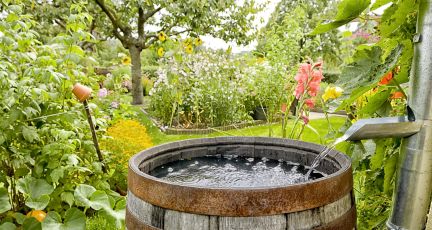
Rainwater Harvesting for Urban Gardens
Even small urban spaces can collect significant amounts of rainwater:

Simple rain barrel system

Gutter diversion system
A basic rainwater harvesting system includes:
- Collection Surface: Typically a roof or awning
- Conveyance System: Gutters, downspouts, or pipes that direct water
- Storage Container: Barrels, tanks, or other vessels
- Distribution Method: Spigots, hoses, or watering cans
DIY Rain Barrel
Create a simple rain barrel using a food-grade plastic drum:
- Clean the drum thoroughly
- Install a spigot near the bottom for water access
- Create an overflow outlet near the top
- Cut an opening in the lid for downspout connection
- Cover all openings with fine mesh to prevent mosquito breeding
- Place the barrel on a stable, elevated platform
- Connect to your downspout or create a rain chain
Greywater Reuse
Greywater—used water from bathing, laundry, and dishwashing—can be repurposed for garden irrigation with some precautions:
- Use only water from sources without fecal contamination (avoid toilet water)
- Use biodegradable, plant-friendly soaps and detergents
- Apply greywater directly to soil, not to plant leaves or edible parts
- Rotate greywater use with fresh water to prevent salt buildup
- Use greywater within 24 hours to prevent bacterial growth
Greywater Cautions
Do not use greywater:
- If anyone in the household has an infectious disease
- If it contains bleach, borax, or strong cleaning chemicals
- On root vegetables or leafy greens that will be eaten raw
- If it has an unpleasant odor (indicating bacterial growth)
Pest Management in Urban Settings
Urban gardens face unique pest challenges but also benefit from some natural protections.
Common Urban Garden Pests
Urban environments often host specific pest populations:
- Aphids: Small sap-sucking insects that cluster on new growth
- Spider Mites: Tiny arachnids that thrive in hot, dry conditions
- Whiteflies: Small white insects that feed on plant sap
- Caterpillars: Larvae of butterflies and moths that eat leaves
- Snails and Slugs: Mollusks that feed on leaves and seedlings
- Fungus Gnats: Small flies that indicate overwatering
Preventive Strategies
The best pest management begins with prevention:
1
Start with Healthy Plants
Well-nourished plants in appropriate growing conditions naturally resist pests and diseases. Avoid overcrowding, which creates humid conditions favorable to pests and diseases.
2
Practice Good Sanitation
Remove dead leaves and plant debris promptly. Clean containers and tools between plantings to prevent disease carryover.
3
Inspect Regularly
Check plants frequently, looking under leaves and at stem joints where pests often hide. Early detection allows for simpler interventions.
4
Use Physical Barriers
Fine mesh netting or row covers can protect plants from flying insects. Copper tape around containers deters snails and slugs.
5
Attract Beneficial Insects
Even in urban settings, flowering plants like marigolds, zinnias, and herbs can attract beneficial insects that prey on garden pests.
Natural Pest Control Solutions
When pests do appear, try these low-impact solutions before resorting to stronger measures:
Manual Removal
- Hand-pick larger pests like caterpillars and snails
- Use a strong stream of water to dislodge aphids and spider mites
- Set simple traps for slugs (shallow containers of beer) or whiteflies (yellow sticky cards)
Homemade Sprays
- Soap Spray: 1 tablespoon mild liquid soap in 1 liter water (effective against soft-bodied insects)
- Neem Oil Solution: 1 teaspoon neem oil and 1/2 teaspoon mild liquid soap in 1 liter water
- Garlic-Chili Spray: Blend 4 cloves garlic, 1 hot chili pepper, and 1 liter water; strain and spray
- Tobacco Leaf Tea: Soak 1 cup tobacco leaves in 4 liters water for 24 hours; strain and spray
Application Tips for Homemade Sprays
- Test on a small area first to ensure no plant damage
- Apply in early morning or evening, not in hot sun
- Spray both tops and bottoms of leaves
- Reapply after rain
- Wash edible plants thoroughly before consumption
Companion Planting for Pest Management
Strategic plant combinations can deter pests naturally:
- Marigolds: Repel nematodes and many insects
- Basil: Deters flies and mosquitoes
- Nasturtiums: Act as trap crops for aphids
- Chives and Garlic: Repel aphids and some beetles
- Lemongrass: Deters mosquitoes
When to Seek Help
Some situations warrant additional intervention:
- When natural methods fail after multiple attempts
- When dealing with invasive pests that spread rapidly
- When plants show signs of disease along with pest damage
- When you cannot identify the pest or problem
In these cases, consult with local agricultural extension services or experienced gardeners in your community.
Seasonal Considerations
Urban gardens require different management approaches throughout the year, especially in regions with distinct seasons.
Seasonal Challenges and Solutions
Hot Season Management
Urban heat islands can make hot seasons particularly challenging:
- Provide afternoon shade using shade cloth, umbrellas, or strategically placed taller plants
- Water deeply in the early morning before temperatures rise
- Use light-colored containers to reflect heat and keep root zones cooler
- Apply extra mulch to conserve moisture and moderate soil temperature
- Focus on heat-tolerant crops like okra, sweet potatoes, amaranth, and indigenous vegetables
Rainy Season Management
Heavy rains can create challenges for container gardens:
- Ensure excellent drainage in all containers
- Elevate containers to prevent waterlogging during heavy rains
- Consider temporary covers for delicate plants during the heaviest downpours
- Monitor for fungal diseases which proliferate in humid conditions
- Plant disease-resistant varieties when available
Dry Season Management
Water conservation becomes critical during dry periods:
- Group plants to create humid microclimates
- Use self-watering containers or wick systems
- Apply deep mulch to minimize evaporation
- Consider ollas (unglazed clay pots) buried in containers for slow water release
- Focus on drought-tolerant herbs and vegetables
Cool Season Management (Where Applicable)
In regions with cooler winters:
- Move containers to south-facing locations (north-facing in Southern Hemisphere)
- Group containers together for thermal mass
- Use dark containers to absorb heat
- Consider row covers or mini-greenhouses for cold-sensitive plants
- Focus on cool-season crops like leafy greens, peas, and root vegetables
Year-Round Planting Strategies
Maintain continuous production through strategic succession planting:
1
Plan Crop Rotations
Even in containers, rotate plant families to reduce pest and disease buildup. For example, follow tomatoes (nightshade family) with beans (legume family), then leafy greens (amaranth or brassica family).
2
Stagger Plantings
Instead of planting all of one crop at once, plant small amounts every 2-3 weeks for continuous harvests. This works especially well for quick-growing crops like radishes, lettuce, and bush beans.
3
Interplant Fast and Slow Crops
Combine quick-maturing plants like radishes or lettuce with slower-growing ones like tomatoes or peppers. The fast crops will be harvested before the slow ones need their full space.
4
Maintain Seedlings
Keep a small nursery area for starting seedlings so they're ready to transplant as soon as space becomes available.
Seasonal Planting Calendar
Download our detailed seasonal planting calendar customized for different African climate zones, with specific recommendations for container gardening.
Download PDF
Urban gardening thrives with community connections and shared knowledge.
Finding Local Support
Connect with these resources in your community:
- Community Garden Groups: Even if you garden at home, these groups often share knowledge, seeds, and resources
- Urban Farming Organizations: Many cities have NGOs focused on urban agriculture that offer workshops and support
- Agricultural Extension Services: Government-supported programs that provide gardening advice and resources
- Seed Saving Networks: Groups that preserve and share locally adapted seed varieties
- Social Media Groups: Local gardening groups on platforms like Facebook or WhatsApp
Sharing Resources
Urban gardening becomes more sustainable through sharing:
- Tool Libraries: Community-based systems for sharing expensive or rarely used tools
- Seed Exchanges: Trading seeds with other gardeners to increase diversity
- Compost Cooperatives: Neighborhood-scale composting systems
- Knowledge Sharing: Workshops, demonstration gardens, and mentorship programs
Starting a Neighborhood Garden Network
Even a small network of urban gardeners can provide significant benefits:
- Create a simple WhatsApp group or social media page for local gardeners
- Organize seasonal seed and seedling exchanges
- Share bulk purchases of soil, amendments, and containers
- Coordinate garden visits to learn from each other's successes and challenges
- Document and share local growing information specific to your microclimate
Dilulu's Urban Gardening Programs
Dilulu offers several resources specifically for urban gardeners:
- Urban Garden Starter Workshops: Hands-on training sessions in communities across Africa
- Container Gardening Kits: Affordable starter packages with containers, soil, seeds, and instructions
- Online Courses: Self-paced learning modules on urban food production
- Mentorship Program: Connecting new gardeners with experienced urban growers
- Community Garden Support: Technical assistance for establishing shared growing spaces
To learn more about these programs or to find resources in your area, visit our Urban Gardening Programs page or contact our regional office.

About the Author
Grace Okafor is an urban agriculture specialist with over 15 years of experience developing container gardening systems in West African cities. She leads Dilulu's Urban Food Security program and has trained more than 5,000 urban gardeners across the continent.